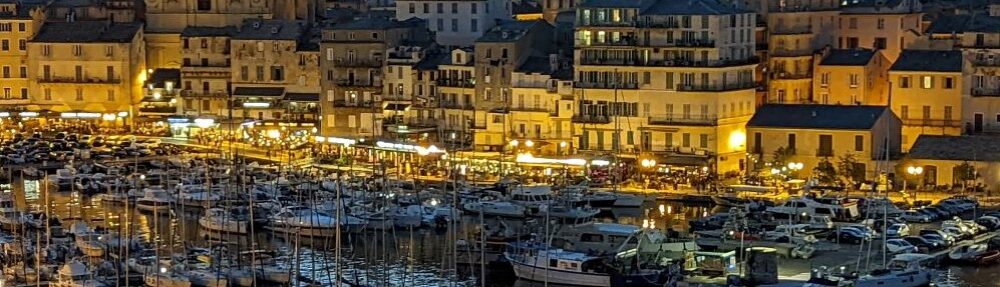
Views near Golden Grove

With a hey, ho, the wind and the rain…

The storm moved onto the island a little before noon today. It’s blowing and pouring, battering at windows and roof. The US Weather Service is predicting sixty-mile-per-hour gusts. All the ferries today are canceled. We are snug inside and enjoying the show. But it does seem appropriate to post last night’s breathtaking sunset, unsettled and intimating a change in the weather.

5:40 pm


5:50pm


Views near Golden Grove

October 16, 2011. Sometime between when we left the house and when we lined up at the ferry terminal, this unlikely cloud formation appeared in the sky, lit from below by the setting sun. It seemed to forebode a serious change in the weather, but instead vanished within minutes, leaving no trace.

Cambodia – Phnom Penh’s Russian Market

Dan and I are market junkies. We don’t buy very much. Well, maybe a few silk scarves and wooden cow bells, that sort of thing, only a small smattering of the goods available. Mostly we’re there to absorb the patterns and rhythms of the place. The visual candy. And to experience each market’s unique character.

And so…allow me to present the Russian Market in Phnom Penh, so named in the 1980s when the Russians were the only tourists in town, and this is where they went to find cheap local goods to ship home. And it’s still probably the best place for that kind of thing today, as well as every other kind of merchandise under the sun. And as rich in visual candy as they come.

Here is a somewhat random walk through the market, in one side, through the food court in the middle, and out the other side.


Chihuly

I’ve been meaning to share some photos of the Chihuly exhibit in Boston for the last couple of months, but the Southeast Asia photographs preempted everything for a while. But these are just too beautiful to keep under wraps any longer. I don’t have any commentary. The glass is everything.


Amber, exposed

Relaxed, yet alert, Amber wonders why I keep flashing this bright light in his face.

Views near Golden Grove

These days the sun is setting pretty far toward the south end of Sachem Pond. Last night the sun ducked behind some clouds just before setting. No sharp red sun against the dunes, but it lit up the sky.


Cambodia – Siem Reap, silk farming and weaving

In the town of Siem Reap, an organization called Artisans d’Angkor provides employment for rural people by teaching them ancient handicrafts. This organization also runs a silk farm in a more remote area. It was a bit off the beaten tourist trail, and we had to ask our guide to bring us there. Thank heavens, no crowds!

The silk farm grows its own mulberry trees and raises its own silkworms. Not nearly enough to supply the large quantities of silk they need for their weaving operations (the rest comes from China), but the worm-growing part of the business still seemed young, as were the trees. It was a beginning.

Silk worms are entirely domesticated animals, no longer found in the wild. They grow fast and are voracious eaters that must be fed frequently. They live only about four weeks before beginning to spin their cocoons. When the cocoons are completed, all but a few (kept for breeding) are harvested and boiled to remove the sericin coating that holds the cocoon together and also, alas, to kill the forming moth within, which would otherwise secrete an acid that would damage the silk thread.


Each cocoon is made of a single silk filament more than half a mile long. The worker finds the ends of several cocoons (if you look hard you may be able to see the fine filaments leading to the tool in the worker’s hand above) and inserts them into a machine that unwinds them from the cocoon. It winds several filaments together into a thread on a reel. The threads are then wound onto bobbins.


Some of the thread is bleached into “fine” silk, and some is left its natural color as “raw” silk. The silk is then colored using dyes made from a variety of natural ingredients.


More detailed descriptions of the life of the silkworm (Bombyx mori) can be found here and here.

The finished, dyed silk is then woven using hand-operated looms.


Cambodia – Seen (scene) along the road in Siem Reap

In Cambodia, the population is mostly Buddhist (94%), with a small admixture of Moslems (mostly Chan people) and Christians (mostly Chan and Vietnamese). But the old pre-Buddhist animistic religions still persist in a few practices. The most notable of these are the spirit houses that are found everywhere–on the properties of homes and shops and government buildings alike. Spirit houses are built for the resident spirits of the place, especially the dangerous ones, so that they will not move into the people’s houses or shops. Often, these spirit houses contain images or offerings of some kind for the spirits.


I briefly considered getting one for our home in Massachusetts, but it was hard to know how the neighbors would feel about it. Also, Dan and I figured the mailmen would persist in putting the mail there, which might be offensive to the spirits. And–the real deal-killer: the things are made of concrete, probably driving us way over the checked-luggage weight limit.

Shops of all sorts line the roads. Here are a basket store, a variety store, a cell phone store, and a gas station. Yes, gas by the liter, and probably illegal, too. Judging from the repose of the attendant, the gas station is not very busy.

   This roadside gate leads to an ancient monastery compound.

The town of Siem Reap itself is very tourist-oriented, with some strip development. But the older part of town retains a certain charm.


Cambodia – Tonle Sap Lake

The Tonle Sap, or Great Lake, is one of the largest and most important fresh-water systems in southeast Asia. It’s also one of the most interesting. The lake is connected via the Siem Reap River to the Mekong River and is home to a number of communities of ethnic Cham and Vietnamese people who live on houseboats. During the dry season the Siem Reap River flows from the lake, which at that time of year is only about a meter deep, and drains into the Mekong River. During the monsoon season, however, the Siem Reap River reverses direction and flows from the Mekong River into Tonle Sap Lake. The lake grows much larger (by a factor of four or five) and deeper (by a factor of eight or nine), and the people move seasonally from lake to the mouth of one of its feeder rivers and back again, wherever the fishing is best.

We visited during the start of monsoon season, and the river leading to the mouth of the lake was lined with houseboats. (The brown color of the water is due to a high rate of sedimentation, a normal phenomenon of this ecosystem.)


“People here live pretty close to their neighbors,” our guide pointed out. “So do you know what they do if it turns out they and their neighbors don’t get along?”

“What?” we asked.

His eyes gleaming, he said, “They move! Home and all!”

And we were, in fact, lucky enough to see someone in the process of doing just that.


And there weren’t just houseboats. There were also shop-boats of all sorts, and cafe-boats and basketball-court-boats and church-boats. All of these migrate up and down the lake with the people.


There’s even a grocery delivery service.

Since many of the people are fishermen, they work in the evenings and at night, and they rest during the day. And so we saw a lot of people at home, many of whom were sleeping in their hammocks.


At the mouth of the river,we reached the end of the settlement and the open expanse of the lake.